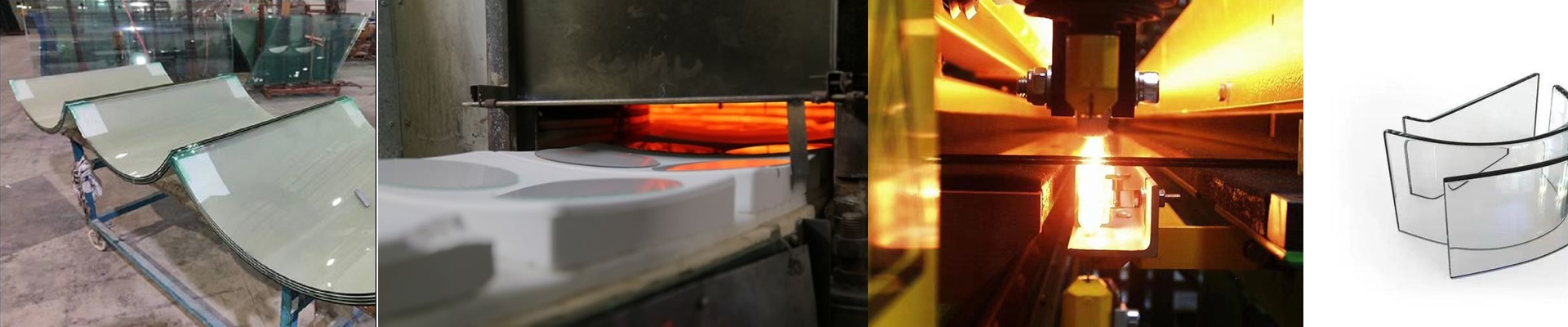
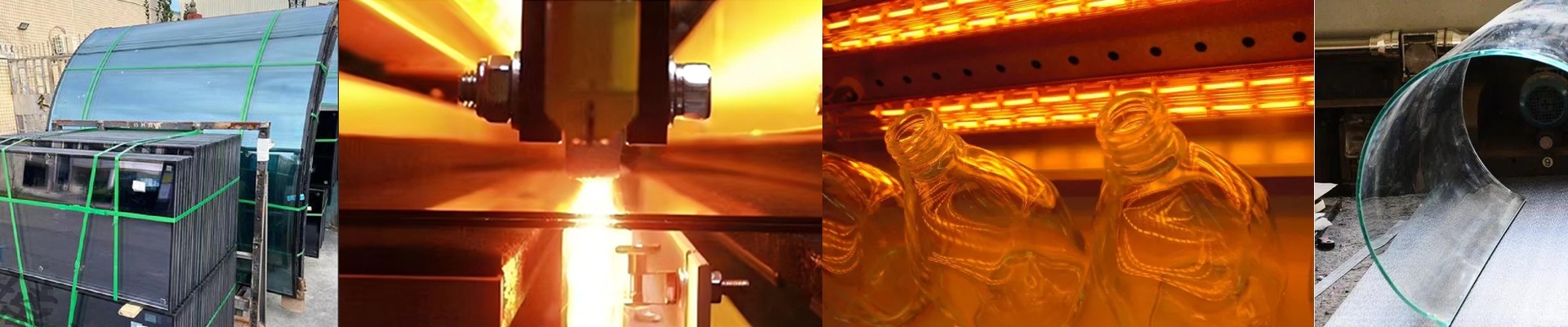
Borosilicate on the line doesn’t forgive mistakes. Thermal shock shows up as hairline fractures, warped edges, and whole sheets that get scrapped after bending or tempering. Convection ovens stretch the heat-up time, and uneven hot zones force you to back off the pace just to keep from chasing defects. What matters, technically We built the infrared lamp around short-wave NIR elements in a quartz envelope. That matters because borosilicate absorbs strongly in this band, so you heat the glass directly instead of leaning on air. It’s radiative transfer, and the thermal footprint stays tight. Output is tuned to the emissivity and thickness you’re running, with power density options that keep the surface from scorching while the body gets up to temperature. The filament geometry and reflector layout are laid out to give you a uniform heating band—consistent across the sheet, not a patchwork of hot spots and cold edges. Why it works in real glass processing Speed only matters if yield holds. With this lamp, you cut soak time and you cut the variability that convection currents always introduce. That means faster cycles on bending and tempering, better repeatability on curvature, and fewer stress fractures. You also save energy because you’re heating the glass itself, not the whole chamber. On high-throughput lines, it integrates as a drop-in module, so you can swap out aging heaters without reworking the machine footprint. Here are the practical details The lamp plays nicely with standard fixtures, but alignment is non-negotiable. Set the focal plane to the glass surface, then confirm the temperature profile across the width with a scan. Keep the quartz clean—dust and coating overspray scatter the radiation and you’ll end up with uneven heating. And because this delivers intense radiant energy, the shielding and interlocks have to stay intact. This isn’t a retrofit you rush.